


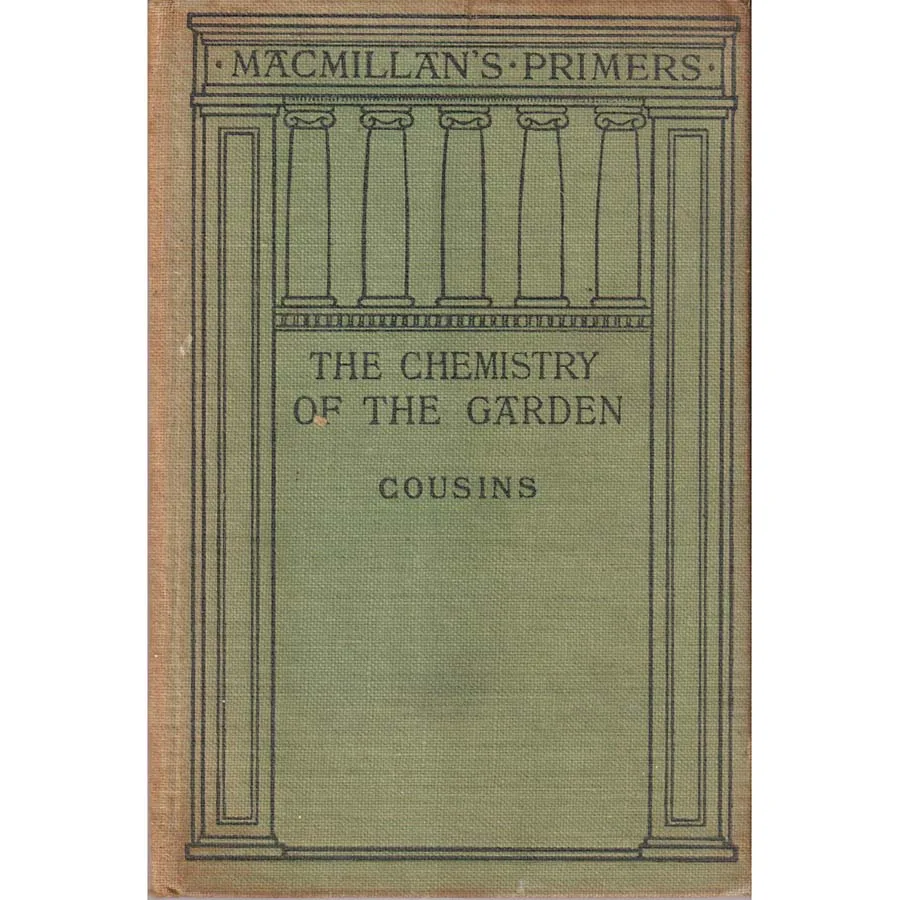
The Chemistry Of The Garden
Publisher: MaCmillan
Format: Hardback
ISBN: none
The Chemistry of the Garden (1948) by Herbert H. Cousins – Macmillan
Gardening is often presented as a peaceful pastime involving roses, sunshine, birdsong and the occasional tasteful wheelbarrow.
Herbert H. Cousins had other ideas.
The Chemistry of the Garden, published by Macmillan in 1948, looks beneath the pleasant surface of horticulture and asks the rather more alarming question: what on earth is actually going on down there?
The answer, naturally, is chemistry.
Soil is not simply dirt. Fertiliser is not simply “plant food”. Lime is not something you scatter about because somebody in a flat cap once told you to. Water, minerals, acids, alkalis, nitrogen, phosphates and countless other substances are all quietly conducting business beneath your cabbages while you stand above them wondering why the beans look miserable.
Cousins sets out to explain the chemical processes behind successful gardening, showing how soil composition, nutrients and other scientific factors influence the growth and health of plants. It is horticulture viewed not merely from the potting shed, but from the laboratory bench.
Published in 1948, the book also comes from a particularly interesting period in British gardening. The country had only recently emerged from wartime rationing and the Dig for Victory years, when cultivating a productive garden was considerably more than an aesthetic hobby. Understanding how to get the best from the soil could have distinctly practical consequences.
There is something wonderfully serious about older gardening books. Modern gardening advice might tell you to buy a convenient bottle marked “All Purpose Feed”. A book like this is more likely to explain precisely why the plants need feeding, what the relevant chemical compounds are doing and why your soil may have developed an objection to cooperating.
It belongs to an era in which gardeners were expected to know things.
Potential hydrogen levels were not merely represented by an electronic meter purchased online. Compost was not simply delivered in brightly coloured plastic bags. The successful gardener was part botanist, part chemist, part meteorologist and part person staring suspiciously at a patch of earth wondering what had gone wrong.
For modern readers, some of the terminology and recommendations inevitably belong to their time, but that is part of the attraction. This is both a practical gardening book and a piece of horticultural history, showing how scientific knowledge was being applied to everyday cultivation in the middle of the twentieth century.
It will appeal to collectors of vintage gardening books, students of horticultural history, gardeners with a scientific streak and anyone who has ever suspected that their rhododendron is failing for reasons more complicated than spite.
This copy is in Good condition, having survived since 1948 with considerably greater success than many of the plants its previous owners were presumably attempting to cultivate.
At more than seventy years old, it naturally carries the character of an older book, but remains a solid and usable example. No ISBN is present, having been published before books were required to report for numerical identification.
Ideal for a gardener who likes to know why something works rather than merely being told to sprinkle half a handful around the base and water thoroughly.
Sold by Crappy Old Books, where we understand that every garden contains complex chemical processes, while our own stockroom mainly contains dust, cardboard boxes and several mysterious substances we have decided not to analyse.
ISBN: None
Condition: Good
Keep browsing: See more Gardening books Other books by Herbert H Cousins
